Medical Treatment
The treatment of a paronychia requires drainage of pus. This can be easily done in the physician’s office and takes less than 15 minutes. The entire finger is numbed and an incision is made on the side of the nail where the infection is most obvious. This will immediately relieve pain, redness, and swelling.
To ensure that all the pus is drained, some physicians may insert a small piece of gauze or wick in the incision. The wick will keep the wound open and allow pus to drain. This packing is left for about 24-48 hours. The finger should be soaked in warm water the next day and the wick replaced.
In some severe cases of paronychia where the infection has involved the fingernail, one may require partial or complete removal of the nail. In the majority of cases, antibiotics are very rarely required once the pus is drained. It is not necessary to obtain cultures from the fluid that is drained. However, some physicians may obtain cultures if the infection is severe.
After drainage, one should continue with warm soaks. Healing takes anywhere from 5-7 days and in a few weeks the finger and nail will be normal
How to prevent paronychia?
Paronychia usually starts because of trauma to the skin near the nail. So to prevent a paronychia:
- avoid traumatizing your finger nails
- avoid the habit of biting your nails
- wear rubber gloves if your hands are constantly
in contact with water
- if you are a diabetic, ensure that your blood sugar
levels are under control
- if you work in a dirty environment, wash hands frequently
- wear protective gloves if you frequently deal with harsh
chemicals
Paronychia is an easily treated infection and the outlook is excellent.
For more on gloves, anti septics and diabetic supplies, please visit www.medexsupply.com
Showing posts with label paronychia. Show all posts
Showing posts with label paronychia. Show all posts
Saturday, June 13, 2009


Paronychia: part 2
Medical Care
Paronychia does not always have to be treated by a physician. In many cases, home remedies may help decrease redness and pain. However, there are times when the redness and infection extend to the entire digit and be associated with severe pain. Further, the infection can extend into the deeper spaces of the fingertips. In such scenarios, a visit to a doctor or the Emergency room would not be a bad idea.
The treatment of pus in a fingertip usually requires a small incision to allow the fluid to drain. Pus drainage is not something that should be attempted at home, unless you have both medical personnel and sterile equipment at home.
Diagnosis
The diagnosis of a nail bed infection does not require any type of radiological study. Any physician with reasonable skills should be able to make a diagnosis of paronychia from a physical exam. It is very rare to obtain any blood work or x rays when a paronychia is suspected.
Self-Care at Home
When a paronychia first develops, one should start home remedies at once. Soak the finger in warm water 3-4 times a day. Soak the hand for at least 15-30 minutes each session. Soaking will relieve pain, redness, and swelling. There is a lot of debate about adding antibiotics or anti septic to the warm water soaks. In most cases, there is no need to do add anything. A simple soap and warm water is more than adequate.
Paronychia does not always have to be treated by a physician. In many cases, home remedies may help decrease redness and pain. However, there are times when the redness and infection extend to the entire digit and be associated with severe pain. Further, the infection can extend into the deeper spaces of the fingertips. In such scenarios, a visit to a doctor or the Emergency room would not be a bad idea.
The treatment of pus in a fingertip usually requires a small incision to allow the fluid to drain. Pus drainage is not something that should be attempted at home, unless you have both medical personnel and sterile equipment at home.
Diagnosis
The diagnosis of a nail bed infection does not require any type of radiological study. Any physician with reasonable skills should be able to make a diagnosis of paronychia from a physical exam. It is very rare to obtain any blood work or x rays when a paronychia is suspected.
Self-Care at Home
When a paronychia first develops, one should start home remedies at once. Soak the finger in warm water 3-4 times a day. Soak the hand for at least 15-30 minutes each session. Soaking will relieve pain, redness, and swelling. There is a lot of debate about adding antibiotics or anti septic to the warm water soaks. In most cases, there is no need to do add anything. A simple soap and warm water is more than adequate.
What is paronychia (nail infection)?
Some individuals develop an infection along the edge of the fingernail or toe nail-this is known as paronychia. It is a very common hand infection and frequently seen in individuals who bite their nails. When left untreated, paronychia can progress and involve the entire finger or toe. It is also quite painful.
Paronychia Causes
Paronychia is commonly caused by bacteria that reside on skin. When the skin around the nail edges has been broken or damaged, these bacteria can easily cause an infection. Common causes which lead to skin damage around nails is nail biting, finger sucking, frequent dishwashing with bare hands, regular encounters with harsh chemicals and detergents or improper clipping of nails. Besides bacteria, fungi can also cause paronychia.
Symptoms
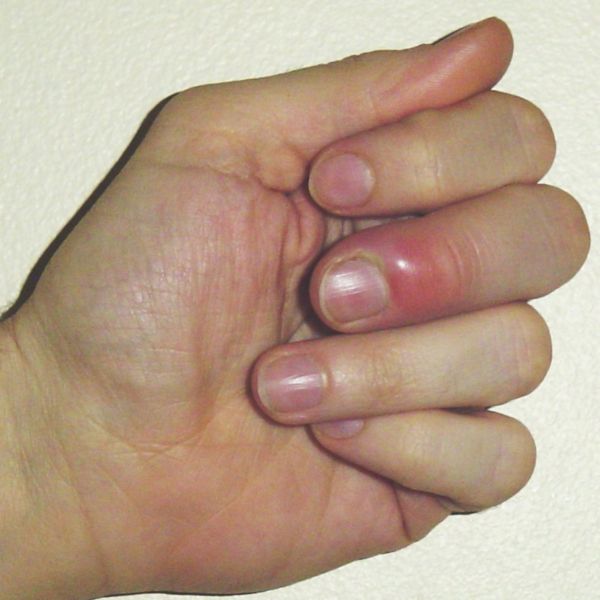
Paronychia usually starts with redness and swelling that is localized to the lateral side of nail. Pain is constant and is made worse by pressing on the nail. Often, there may be a yellowish discharge from the nail edge. When the fingertip starts to swell, chances are that fluid has collected under the skin and is most likely pus (abscess)
The most common symptoms of a paronychia are:
- Swelling
- Redness
- Pus collection
- Pain
- Tenderness to touch
Paronychia Causes
Paronychia is commonly caused by bacteria that reside on skin. When the skin around the nail edges has been broken or damaged, these bacteria can easily cause an infection. Common causes which lead to skin damage around nails is nail biting, finger sucking, frequent dishwashing with bare hands, regular encounters with harsh chemicals and detergents or improper clipping of nails. Besides bacteria, fungi can also cause paronychia.

Symptoms
Paronychia usually starts with redness and swelling that is localized to the lateral side of nail. Pain is constant and is made worse by pressing on the nail. Often, there may be a yellowish discharge from the nail edge. When the fingertip starts to swell, chances are that fluid has collected under the skin and is most likely pus (abscess)
The most common symptoms of a paronychia are:
- Swelling
- Redness
- Pus collection
- Pain
- Tenderness to touch
Saturday, May 9, 2009
Ingrown Toe Nails 101
Ingrown toenails occur in close to 20% of the population. The condition is also known as Onychocryptosis . When the condition is full blown, it present with a painful, red, foul smelling lesion that often involves the big toe.
An ingrown toenail is a common problem in our society. Many consumers routinely visit their physician complaining of an ingrown toenail. An ingrown toenail occurs when the side of the toe nail grows into the soft flesh part of toe. Usually the big toe is affected but the disorder can occur in any toe. The most common complaint is pain, redness, swelling, or foul discharge. When the condition is acute, most people have difficulty wearing shoes.
Ingrown toenail can be easily treated at home, but many people let the condition get severe and then the only alternative is help from a physician.
In most individuals, ingrown toenails are a nuisance. However, in diabetics and those with poor blood circulation, an ingrown toenail can cause a serious limb threatening infection.
The typical symptoms of an ingrown toenail include:
- Pain, which is most common along the side of nail
- The toe is tender to touch
- Redness around the nail
- Swelling of the toe
- Foul smelling discharge can also occur
Consumers who have ingrown toenails can manage the problem at home. However, if you are a diabetic or have severe pain, it is best to let a health professional look at the toe.

An ingrown toenail is a common problem in our society. Many consumers routinely visit their physician complaining of an ingrown toenail. An ingrown toenail occurs when the side of the toe nail grows into the soft flesh part of toe. Usually the big toe is affected but the disorder can occur in any toe. The most common complaint is pain, redness, swelling, or foul discharge. When the condition is acute, most people have difficulty wearing shoes.

Ingrown toenail can be easily treated at home, but many people let the condition get severe and then the only alternative is help from a physician.

In most individuals, ingrown toenails are a nuisance. However, in diabetics and those with poor blood circulation, an ingrown toenail can cause a serious limb threatening infection.
The typical symptoms of an ingrown toenail include:
- Pain, which is most common along the side of nail
- The toe is tender to touch
- Redness around the nail
- Swelling of the toe
- Foul smelling discharge can also occur
Consumers who have ingrown toenails can manage the problem at home. However, if you are a diabetic or have severe pain, it is best to let a health professional look at the toe.
Subscribe to:
Posts (Atom)